Guide13 min read
How much does a restaurant website cost in the UK?
The short answer
A restaurant website in the UK costs least as a template on a website builder, more from a freelancer, more again from a small studio that designs and builds it from scratch, and most from a big agency. Within each route the price rises with the number of venues, how bookings and vouchers are handled, whether photographs and film are made for the site, and the help you want after launch. For one venue with good photographs and a booking link, a template is enough.
The four ways to get a restaurant website made
Almost every restaurant website is made in one of four ways. They differ in who does the work, and that is most of the difference in cost.
The four routes side by side
| A template | A freelancer | A small studio | A big agency | |
|---|---|---|---|---|
| What it costs | The least | More | More again | The most |
| Who designs it | You, starting from a ready-made design | One person | A small team of senior designers and developers | Departments of designers and developers |
| What you pay for | A monthly or yearly fee to the builder | One person's time | Several people's time, priced as a project | Many people's time, and the agency's overheads |
| Photographs and words | Yours to supply | Usually yours, or arranged separately | Often made for the site by the same team | Made by the agency or by suppliers it brings in |
| Bookings and vouchers | A link or a ready-made block from your booking system | Linked or embedded, with some styling | Designed into the pages around your booking system | Designed into the pages around your booking system |
| Changing it later | You, in the builder's editor | You or the freelancer, depending on how it was built | Your team, in an editor set up for them, with the studio on hand | Your team, in an editor set up for them, or through your account manager |
| Who you talk to | The builder's support team | The freelancer | The people doing the work | An account manager |
| The main risk | Looking like other restaurants on the same template | Everything rests on one person | Paying for more than you need | Paying for overheads, and never meeting the people who do the work |
What makes one restaurant website cost more than another
Two restaurants can both ask for a website and need very different amounts of work. Six things account for most of the difference, whichever route you take.
Venues and things to sell
Costs less: One dining room with one menu
Costs more: Rooms, a second restaurant, vouchers and a shop
Bookings and vouchers
Costs less: A link to your booking system
Costs more: Booking, voucher and gift pages designed as yours
Photography and film
Costs less: Good, recent photographs you already have
Costs more: A shoot made for the site
Menus
Costs less: A PDF, uploaded in a minute
Costs more: Menus built as pages your team can change
Who edits it
Costs less: The builder's own editor
Costs more: An editor set up for your team
After launch
Costs less: Hosting inside a builder's fee
Costs more: Hosting, fixes and marketing billed each month
How many venues, and how many things you sell
One dining room with one menu is a small website. A restaurant with rooms, a second restaurant, private dining, gift vouchers and a shop is several websites that have to feel like one. Each of those needs its own pages, its own way to book or buy, and a clear way in from the home page.
Bookings and vouchers
Most restaurants take bookings through a system from another company, and the website's job is to get a guest to it in as few steps as possible. Adding a link costs next to nothing. Designing the booking, voucher and gift pages so they look like yours and work well on a phone takes design and development time.
Photography and film made for the site
A restaurant website is mostly pictures. If you already have good, recent photographs of the room and the food, any of the four routes can use them. If you don't, a shoot is a cost of its own on every route, and it often does more for the result than the design.
Menus as real pages
Uploading the menu as a PDF takes a minute and costs nothing. But a PDF is awkward on a phone, and search engines and AI assistants read a page far better. Menus built as pages cost more to set up, because someone has to design them and make them easy for your team to change.
Who edits it afterwards
Menus, opening hours and events change all the time. On a builder you change them in its editor. On a site built from scratch, someone has to set up an editor for your team, and that is part of the build. Ask to see the editing screen before you agree to anything.
What happens after launch
A builder's fee includes hosting. A freelancer, a studio or an agency will usually charge separately for hosting, for fixes and changes, and for marketing such as SEO. Ask what you will pay each month after launch, what that covers, and who you contact when something breaks.
When a template is enough
If you need a simple site quickly and on a tight budget, a template will do. That covers a lot of restaurants.
A template is enough when
- you have one venue and one main thing to sell
- you already have good photographs of the room and the food
- your booking system gives you a link or a block to drop into the page
- someone on your team is happy to keep the menu and opening hours up to date
A well-kept template with good photographs will serve you better than a neglected custom site.
A template stops being enough when it would make your place look like everyone else's, or when the site has real work to do, such as selling rooms, vouchers and a shop, or holding several venues together.
Which route suits which restaurant
A template
- Suits
- One venue, a new opening or a tight budget, with good photographs already taken and someone on the team to keep it current.
- Not for
- Several venues, a shop, or a place whose look is one of the reasons people come.
A freelancer
- Suits
- A restaurant that has outgrown its template and wants a design of its own, with a clear brief and its own photographs and words.
- Not for
- A site that needs design, code, photography and film at once, or cover when one person is away.
A small studio
- Suits
- A restaurant group, a restaurant with rooms, or a destination where the website has to sell several things and feel like the place, and where you want to talk to the people making it.
- Not for
- A simple site needed quickly and on a tight budget.
A big agency
- Suits
- A large organisation with many people to keep informed, work in several countries at once, and the budget for the overheads.
- Not for
- An owner who wants to deal with the designer and the developer directly.
What the website earns matters more than what it costs
Plenty of people can design a good-looking restaurant website. Fewer can show that it brought more bookings. A site that looks right and brings nobody is expensive at any price, so ask every route the same thing: what happens after launch to bring guests in, and how will anyone know it is working?
Bring people in
Search, so people find you without a paid click. Ads for the searches worth paying for. Social media for the people who haven't searched yet.
Measure what they do
A website should be measured. We use PostHog to see where people arrive, where they give up, and how many go on to book.
Test a change
An A/B test shows half your visitors one version of a page and half another. The numbers pick the winner, not opinions.
Keep what works
The winner stays and the next test starts, so the same number of visitors brings more bookings.
Then round again, every month
A template leaves all of this to you, and many freelancers hand over at launch. This is where a studio or an agency with marketing people on the team earns the difference in price. Compare quotes on what they will do for your bookings, not only on what the pages will look like.
Seven questions to ask before you accept a quote
Two quotes for a website are rarely for the same work. A cheaper one often leaves out something the other includes. These questions put them side by side, whoever you are thinking of hiring.
Who does the work, and will I talk to them?
Ask for names, and whether the person you brief is the person who designs it.
What is included?
Design, build, photographs, words, and the booking and voucher pages are each either in the price or not.
What will I pay each month after launch?
And what does that cover: hosting, fixes, changes, marketing.
Who can change the menu and the opening hours?
Ask to see the editor your team would use.
Who owns the website, the domain name and the photographs?
Find out what you keep if you part ways.
Can I speak to a restaurant you have made a website for?
A good freelancer, studio or agency will be glad to put you in touch.
How will we know the website is working?
Ask what gets measured after launch, such as bookings and voucher sales, and who looks at the numbers.
How Beyond prices a restaurant website
Beyond is the third route: a seven-person studio in Southampton that designs and codes every website from scratch, and makes the photography, film and illustration for it in the same studio. Everyone who works on your site is senior, and you talk to them directly, with no account manager in between. That keeps our overheads down, so the cost stays below a big agency's. After launch the same team works on what the site brings in: SEO, Google Ads and social media to bring guests to it, PostHog to measure what they do, and A/B tests to raise the share who book. We don't publish a price list. Every project is quoted after a call, based on the scope, and agreed in a written proposal. Ongoing support, SEO and social media are billed monthly, and that work runs month to month.
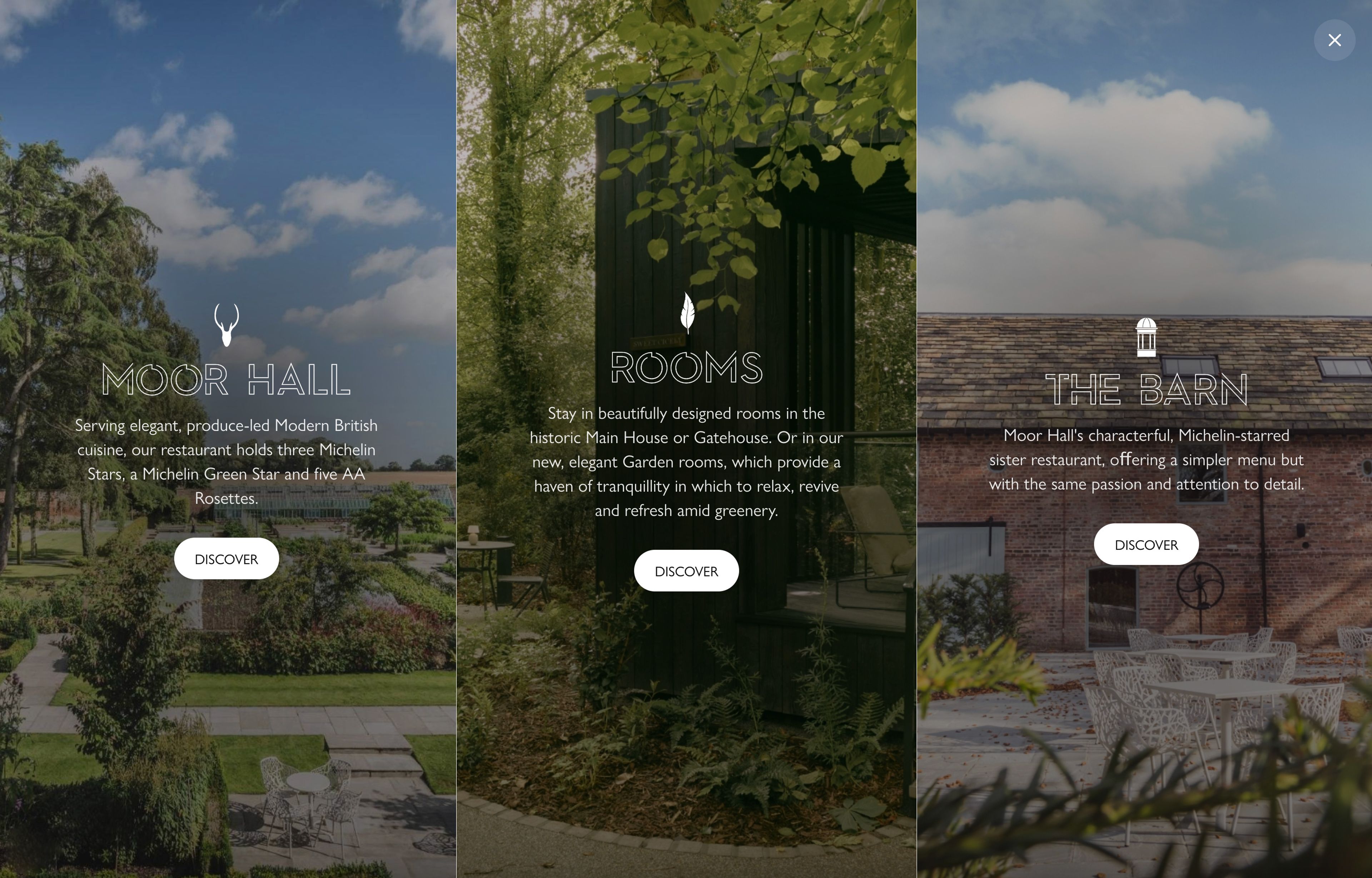
We are not the answer for every restaurant, and our own website design page says so: if you need a simple site quickly and on a tight budget, a template will do. The restaurants we suit have more than one thing to sell and a look worth protecting, like the three-Michelin-star restaurants on our page about websites for Michelin-star restaurants.
Questions
Does a more expensive website bring more bookings?
Not by itself. Bookings come from guests finding the website and the website making it easy to book. A well-kept template with good photographs and a clear booking button can do both. A more expensive website earns its cost when someone also works on search, ads and social media to bring guests in, measures what they do on the site, and tests changes to raise the share who book.
How much does a website cost in the UK?
The cheapest route is a template on a website builder, paid for monthly or yearly: Squarespace's plans, for example, start at £12 a month when paid for a year at a time (Squarespace's pricing page, as of November 2026). A freelancer costs more, a small studio that designs and builds from scratch costs more again, and a big agency costs the most. Within each route, the price follows the amount of work: the number of pages, anything booked or sold online, and whether photographs and words are made for the site.
Is a Squarespace or Wix template good enough for a restaurant?
Yes, if you have one venue, good photographs and a booking system that gives you a link. Guests mostly want to see the room and the food, read the menu and book, and a template does all of that. It stops being enough when you have several venues or a shop to hold together, or when looking like other restaurants on the same template would cost you.
Why don't agencies publish website prices?
Because the word website covers very different amounts of work. One venue using its own photographs and a restaurant with rooms, a shop and a film shoot are not the same job, so one price would be wrong for both. Beyond quotes every project after a call, in a written proposal. Whoever you hire, get the cost and what it covers in writing before you commit.
What does a restaurant website cost to run after launch?
The running costs are hosting, the domain name, your booking system's own fees and someone's time to keep the site current. A website builder includes hosting in its plan. With a freelancer or a studio, ask what the monthly cost covers and whether changes are included. The cost people forget is the time: an out-of-date menu lets a guest down whatever the site cost to build.
Should a restaurant menu be a PDF or a web page?
A web page. A PDF is awkward on a phone, and search engines and AI assistants read a page far better, so a menu page is more likely to be found. Keep a PDF as an extra for anyone who wants to print it. If the meal is meant to be a surprise, don't publish the menu at all, and let the site show the room and how to book.
Do I need professional photographs for a restaurant website?
Usually, yes. If you have recent, well-lit photographs of the room and the food, use them. If you don't, photography is the first thing to spend on, whichever route you take, because a template with good pictures looks better than a custom site with poor ones. Ask the photographer for upright pictures as well as wide ones, because a phone screen is upright.
Where to go next


Made by Beyond
Tell us about your restaurant's website.
Tell us roughly what you have and what the website needs to do. We'll reply within one working day and set up a free call with the people who'd do the work.
What happens next
- 1You'll hear back from us within one working day.
- 2We'll set up a free, no-obligation call with the people who'd actually do the work. Everything is made in-house.
- 3You get a clear proposal with scope, timeline and cost, usually within a week of our call.