
Comparison11 min read
Custom website vs Squarespace or WordPress for a restaurant: which do you need?


The short answer
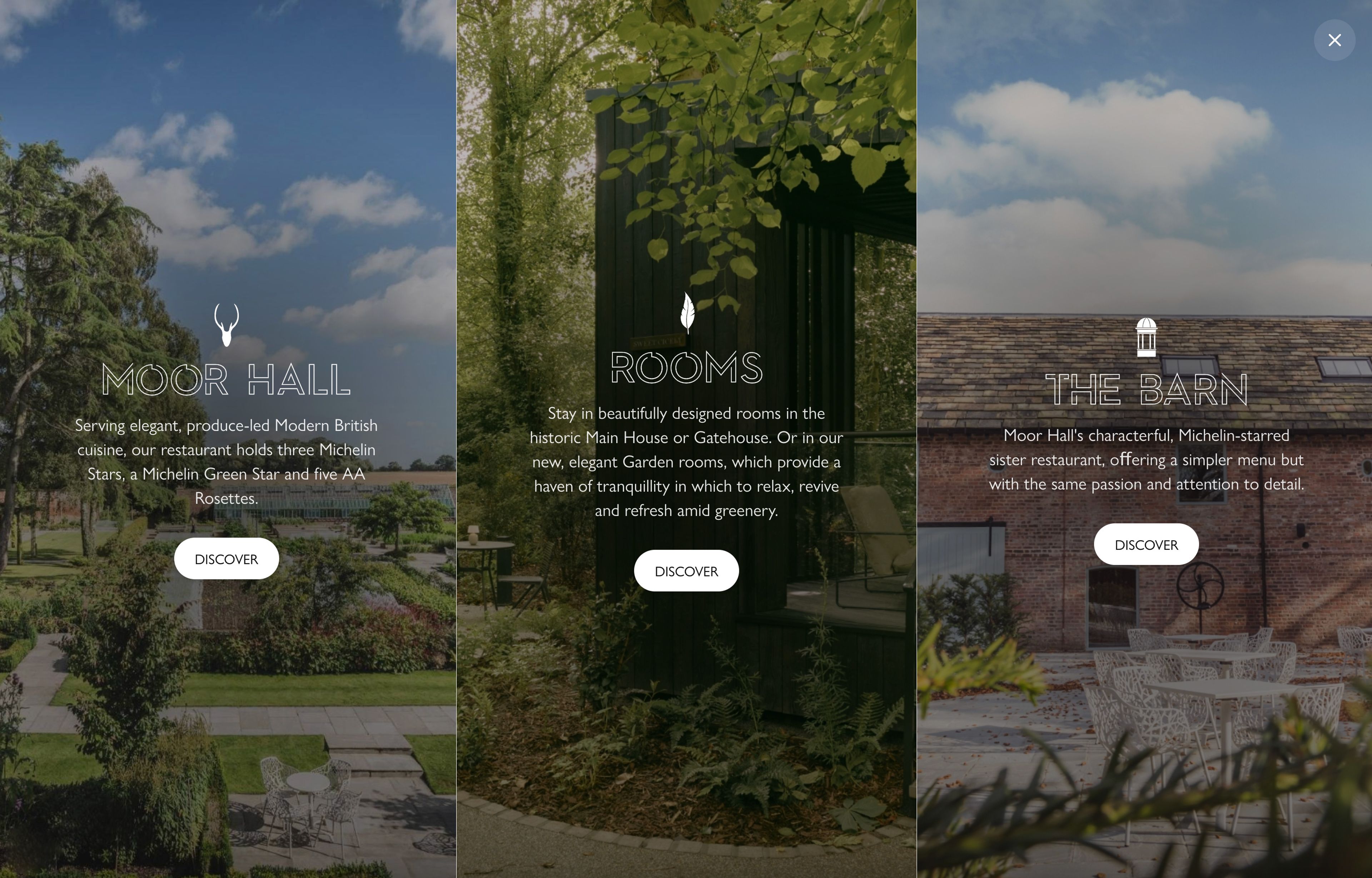
For a restaurant with one venue, good photographs and a booking link, Squarespace is the right choice: the design, the menu pages, the hosting and the support come in one plan. WordPress suits a restaurant that wants more freedom and has someone to keep the software up to date. A custom website, designed and coded from scratch, is worth it when a restaurant has several things to sell, such as rooms, vouchers or a second venue, or has to look like nowhere else.
What the three options are
Squarespace, WordPress and a custom website side by side
| Squarespace | WordPress | A custom website | |
|---|---|---|---|
| Menus | A ready-made menu block, typed in as text | A menu plugin, or pages laid out by hand | Menu pages designed for you, with a form your team fills in |
| Bookings and vouchers | Ready-made blocks for some booking systems, a link for the rest | A plugin, a link or pasted code | Built into the pages around the system you use |
| Speed on a phone | Set by Squarespace and by the size of your pictures | Set by the hosting, the theme and the number of plugins | Set by the people who build it |
| How it looks | A template with your fonts, colours and pictures | A theme, which a developer can change a lot | Designed for your restaurant alone |
| Who edits it | You, in Squarespace's editor | You, in WordPress's editor | You, in an editor set up for your team |
| When something breaks | Squarespace's support team | Whoever set it up, or the hosting company | The people who built it |
| Keeping it running | Squarespace does it, inside the plan | Updates and backups are yours to arrange | Agreed with the people who built it |
How they compare on what a restaurant needs
Menus you can change in a minute
A menu should be a real page of text, not a PDF. It reads better on a phone, and search engines and AI assistants can read every dish. All three options can do it. Squarespace has a menu block made for restaurants, where you type the dishes and prices and the block lays them out (Squarespace's guide to menu blocks, as of November 2026). WordPress does it with a plugin or with pages built by hand.
On a custom website the menu page is designed like the rest of the site, and your team fills in a simple form: dish, description, price. That takes longer to set up. It pays off when you run several menus that change often, or when the menu's design matters to you.
Bookings and vouchers
Almost every restaurant takes bookings through another company's system, so the question is how well the website hands a guest over. Squarespace has ready-made blocks for OpenTable and Tock (Squarespace's guide to restaurant sites, as of November 2026), and a button can link to any other. WordPress usually does it with a plugin from the booking company or a link.
A custom website can put the booking, the vouchers and the private dining enquiry exactly where a guest needs them, in your own design. Ask your booking company what it offers before you choose. If a link is all you need, all three are equal here.
Speed on a phone
Most guests will open your website on a phone, often on the way to you. What slows a page is mostly what is put on it: large photographs, video, and extra code. On Squarespace you control the pictures and little else. On WordPress the hosting, the theme and each plugin all add or take away speed, so two WordPress sites can be very different.
A custom website carries only the code your pages need, so it can be very quick. That is down to the people building it, and a custom site full of heavy film can be slow too.
Whichever you choose, open it on your own phone with the wifi off before you sign it off.
Looking like nowhere else
Squarespace's templates are well designed, and with good photographs a restaurant looks smart on one. The limit is that other restaurants start from the same layouts. A WordPress theme has the same limit, though a developer can change a theme a long way. A custom website has no starting layout, so the pages can be built around one idea that belongs to your restaurant.
Who can edit it, and how
You can edit all three yourself. Squarespace and WordPress let you change almost anything, including the layout, which is freedom and also a way to break a page by accident. A custom website's editor is usually narrower. Your team changes the words, menus, events and pictures, and the design stays put. A new kind of page means going back to the developer.
When something breaks, and keeping it running
When Squarespace is the right choice
If you need a simple site quickly and on a tight budget, a template will do, and Squarespace is a good place to get one.
Choose Squarespace when
- you have one venue and one main thing to sell
- you have good photographs of the room and the food
- your booking system gives you a link or works with a Squarespace block
- nobody on your team wants to think about hosting or updates
When WordPress is the right choice
Choose WordPress when you want more freedom than a builder gives and you have someone to look after it. It suits a restaurant that publishes a lot, such as events, recipes or news, or one that needs a feature Squarespace doesn't have. Plenty of developers know WordPress, so you are not tied to one person.
If nobody will keep it updated, choose Squarespace.
When a custom website is worth it
A custom website costs the most of the three and takes the longest, so it has to earn its place. It does that in two cases.
The first is when the website has several things to sell
The second is when the look of the place is one of the reasons people come
Our page on websites for restaurants shows more.
Whichever you choose, judge it on bookings
All three can look good, and there are plenty of people who can design. What separates a website that pays for itself from one that doesn't is what happens around it: whether guests find it, and whether the ones who arrive go on to book. That work is the same on Squarespace, WordPress or a custom website, and it is never finished.
Bring people in
Search, so people find you without a paid click. Ads for the searches worth paying for. Social media for the people who haven't searched yet.
Measure what they do
A website should be measured. We use PostHog to see where people arrive, where they give up, and how many go on to book.
Test a change
An A/B test shows half your visitors one version of a page and half another. The numbers pick the winner, not opinions.
Keep what works
The winner stays and the next test starts, so the same number of visitors brings more bookings.
Then round again, every month
A custom website makes the testing easier, because any part of any page can be changed and measured. But the loop matters more than the platform. A Squarespace site that someone measures and improves every month is likely to do better than a custom website that is launched and left.
You don't have to replace what you have
The choice is not always one or the other. If your Squarespace or WordPress site does the everyday work well, keep it and spend the money on the part that sets you apart.
Which one suits which restaurant
Squarespace
- Suits
- One venue, a new opening or a tight budget, with good photographs and nobody who wants to look after software.
- Not for
- Several venues to hold together, or a restaurant that must not look like any other.
WordPress
- Suits
- A restaurant that publishes a lot or needs a particular feature, with a freelancer or a host to keep it updated.
- Not for
- A team with nobody to run the updates and backups.
A custom website
- Suits
- A restaurant with rooms, a group, or a destination where the website has to sell several things and feel like the place.
- Not for
- A simple site needed quickly and on a tight budget.
How Beyond builds a custom website
Beyond is a seven-person studio in Southampton. We design and code every website ourselves, usually on Next.js with the Sanity editor, and we don't build new websites on WordPress or templates. We do look after WordPress sites that are already running. If yours works and you want more from your marketing before you commit to a rebuild, we can maintain it, support it and add to it, and rebuild when the time is right. On any of them, the work that brings bookings is the same: SEO, Google Ads and social media to bring guests in, PostHog to measure what they do, and A/B tests to improve the pages.
The designer who designs each page sits next to the developer who builds it. After launch there is no ticket and no queue: you message the people who built the site.
Questions
Is Squarespace good enough for a restaurant website?
Yes, for a restaurant with one venue, good photographs and a booking system that gives it a link. Squarespace has a menu block made for restaurants and looks after the hosting and the software, so there is very little to go wrong. It stops being enough when the website has to hold several venues, rooms or a shop together, or when the restaurant needs a look no template can give it.
Is WordPress or Squarespace better for a restaurant?
Squarespace is better for most single restaurants, because the hosting, security and support come with the plan and nobody has to maintain anything. WordPress is better when you need a feature Squarespace doesn't have or you publish a lot, and you have a freelancer, an agency or a good host to run the updates and backups. WordPress without anyone looking after it is the riskiest of the three options.
Do I need a custom website for my restaurant?
Not if you're opening on a tight budget with one menu and a simple booking link: a well-kept Squarespace site with good photographs will do that job well. A custom website earns its cost when the look and feel of the place is part of why guests book, or when the site has to hold rooms, vouchers, a shop or several venues together.
Can I move from Squarespace to a custom website later?
Yes, and starting on Squarespace is a sensible way to open. Your domain name, words and photographs move with you. The design does not: Squarespace's export leaves out style settings, and the new site is designed from scratch anyway (Squarespace's guide to exporting, as of November 2026). Keep your original photographs somewhere safe, not only on the website.
Can I update a custom website myself?
Yes, if it was built with an editing system, and you should not accept one that wasn't. Your team logs in and changes the menus, opening hours, events and pictures without touching any code. Ask to see the editor before you agree to anything. Beyond sets up Sanity around each client's team and shows them how it works when the site goes live.
Does Beyond build websites on Squarespace or WordPress?
No. Beyond designs and codes every website from scratch, usually on Next.js with the Sanity editor. Beyond does build alongside them: Chêne Bleu's winery websites stayed on Squarespace, and Beyond made the landing page, the interactive label and the film around them. Beyond also maintains, supports and adds to WordPress sites that are already running, for businesses that want to push their marketing further before they commit to a full rebuild.
Where to go next
Made by Beyond
Not sure which one your restaurant needs?.
Tell us what you have now and what the website needs to do. We'll reply within one working day, set up a free call, and say so if a template would do.
What happens next
- 1You'll hear back from us within one working day.
- 2We'll set up a free, no-obligation call with the people who'd actually do the work. Everything is made in-house.
- 3You get a clear proposal with scope, timeline and cost, usually within a week of our call.